What we learned from AI ads in Superbowl XL

For years, Super Bowl ads have been treated like sacred ground in advertising. This was the one night when brands were expected to take real creative risks, invest heavily in storytelling, and aim for something people would actually remember the next morning. Even when an ad missed the mark, it usually felt intentional, like the result of a bold idea that simply did not land with everyone.
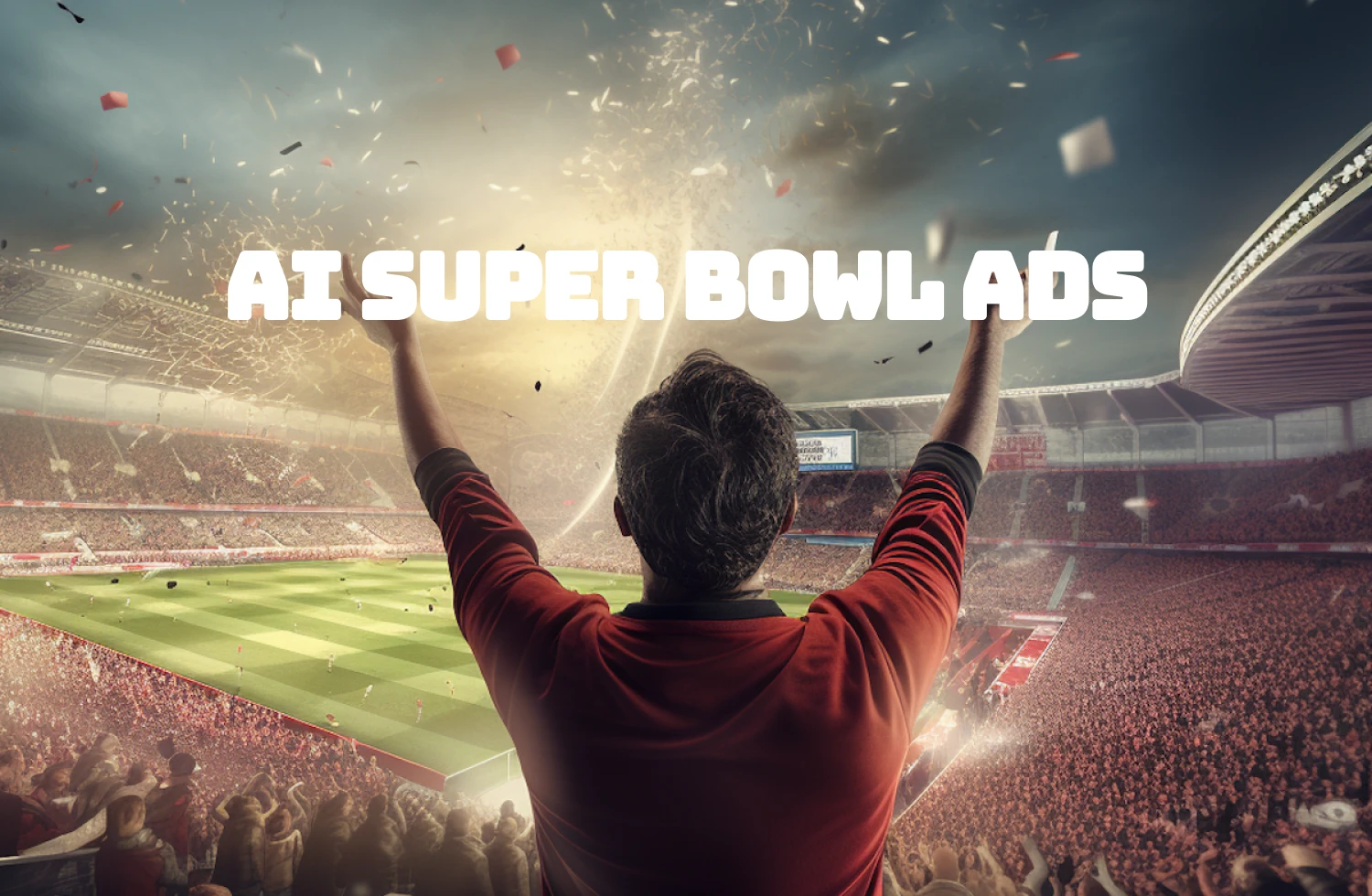
Super Bowl LX felt like a major shift because this year, AI did not just showed up loudly, repeatedly, and across multiple brands, marking the first time generative AI truly felt embedded in the Super Bowl advertising experience. In some cases, AI shaped the visuals. In others, it influenced the concept, the storytelling, or the entire execution of the ad.
One quick scroll through X and you could see that the response was immediate and sharply divided. Some viewers were impressed by how far AI-driven creativity has come, while others found the ads unsettling, lazy, or emotionally empty. Many people were not reacting to any single commercial, but to the broader feeling that something had shifted.
AI is making more a statement than ever because brands are actively experimenting with what creativity looks like in an AI-assisted world, and Super Bowl LX became the most visible testing ground yet.
AI was a heavy presence in Super Bowl ads
AI has been part of advertising workflows for a long time, even if audiences did not always see it. It started quietly, showing up in targeting systems, optimization tools, and copy suggestions that never made it to the surface. Over time, it crept closer to the creative output itself by assisting with visuals and other key parts of campaigns.
Super Bowl LX was different because the presence of AI was no longer subtle by any stretch of the imagination.
Multiple brands leaned into AI as a defining feature of their ads rather than a behind-the-scenes tool. Generative visuals, AI-assisted scripts, and synthetic effects were no longer hidden. In some cases, they were the main attraction.
This kind of shift is often messy and can feel soulless. When a new creative tool enters the mainstream, there is an early phase where novelty often outweighs intention.
That does not necessarily mean the experiment failed, considering that many of these ads made it to the biggest stage possible. But it does highlight that users are wary of
Deeply mixed opinions this year's Super Bowl ads
The reaction online made it clear that audiences noticed the shift immediately.
Some viewers were openly frustrated, describing the ads as soulless or generic and blaming AI for what they saw as a lack of originality. A recurring complaint was that many commercials leaned too heavily on nostalgia, familiar tropes, or glossy generative visuals without offering a compelling story to justify them.
Others were less angry and more uneasy. Watching football broken up by ads that felt algorithmically assembled made some people feel like something fundamental about television advertising had changed, and not necessarily for the better. The phrase “uncanny” came up frequently, especially in response to ads that used AI-generated faces or deepfake-style effects.
At the same time, not everyone hated what they saw.
A smaller but vocal group pointed out that some AI-driven ads were genuinely effective. These viewers argued that the issue was not AI itself, but how unevenly it was used. When AI supported a clear message or enhanced an existing idea, the ad often worked. When it became the idea, the cracks showed.
That split reaction says more about creative execution than it does about the technology. AI became the lightning rod because it was visible, but the underlying criticism was about storytelling, clarity, and emotional resonance.
Brands with AI Super Bowl ads
Looking at the AI-heavy ads side by side makes one thing clear. The difference between a successful AI ad and a forgettable one had very little to do with the technology itself and everything to do with creative intent.
Svedka
Svedka’s ad was one of the most visually AI-forward spots of the night, and it made no attempt to hide that fact.
The visuals leaned heavily into surreal, hyper-polished aesthetics, with motion and textures that immediately signaled generative design. Faces, environments, and transitions all carried that slightly synthetic quality that audiences have learned to recognize.
For some viewers, this worked. Svedka has long lived in a space where abstraction, nightlife logic, and visual spectacle are part of the brand’s identity. In that context, AI felt like a natural extension rather than a sharp departure.
For others, the ad felt more like a technical showcase than a story. The visuals were striking, but they lacked an emotional anchor, which made it harder for the message to stick once the novelty wore off.
The lesson here is not that AI-driven visuals are ineffective, but that spectacle alone rarely carries an ad, especially on a night when everyone is competing for attention.
Anthropic
Anthropic took a noticeably different approach, choosing restraint over spectacle.
Instead of showcasing what AI can generate visually, the ad focused on tone, clarity, and real-world relevance. The design was clean and understated, and the storytelling leaned into everyday scenarios rather than futuristic abstraction.
This choice polarized viewers in a quieter way. Some found the ad underwhelming compared to flashier spots, while others appreciated how grounded and human it felt in contrast to the surrounding noise.
For a brand positioning itself as a thoughtful, safety-conscious player in the AI space, the creative direction made sense. The ad did not try to overwhelm or impress. It tried to communicate value in a way that felt calm and deliberate.
OpenAI
OpenAI’s presence came with a different kind of pressure.
As one of the companies most responsible for bringing generative AI into the mainstream, there's bound to be a lot of attention paid to how they're advertising. The ad leaned into AI as a creative collaborator rather than a replacement, emphasizing how the technology expands what people can do.
Visually, the spot struck a careful balance. Generative elements were present, but they were grounded in human context and real-world use cases. The message focused less on technical prowess and more on possibility.
Reactions were mixed, but notably less hostile than some other AI-heavy ads. Still, there is sufficient commentary flying around social media on Claude outperforming OpenAI with their ad.
Dunkin’ Donuts
Dunkin’ sparked one of the most divided reactions of the night, largely because of how visibly it leaned into AI as part of the creative execution.
Some viewers loved the ad. The humor felt unmistakably on-brand, the pacing worked, and the slightly absurd tone matched Dunkin’s existing creative voice.
Others had a very different response. The deepfake-style faces and strange AI-generated visuals pushed the ad into uncanny territory, drawing more attention to the technology than to the concept itself. One viewer sound it so off-putting they deemed it the "worst AI slop I've ever witnessed"
Dunkin’ chose to use AI loudly rather than subtly, and that choice naturally came with risk. When AI is impossible to ignore, it either strengthens the idea or exposes its weaknesses, especially when realism and human faces are involved.
Google’s ad was one of the most widely praised spots of the night, largely because of how restrained and focused it felt.
Rather than leaning into spectacle, the ad centered on a clear, practical use case that demonstrated how AI can be genuinely helpful in everyday life. The storytelling was grounded with poignant moments that felt "human first" rather than "human replacement".
Most importantly, the ad answered a question of why the technology matters instead of simply showing that it exists.
By prioritizing usefulness over novelty, Google delivered an ad that felt human first and technical second, which resonated strongly with audiences.
For better or worse, AI ads are the new normal
It is tempting to look at the backlash and assume brands will pull back on AI-driven creativity, but that is unlikely to happen.
AI is already deeply embedded in the creative process, from early ideation to final production and optimization. Super Bowl LX did not introduce AI into advertising so much as it made its presence visible to a mass audience.
What will change is not whether brands use AI, but how thoughtfully they choose to integrate it. Early waves of any new creative tool tend to overcorrect, emphasizing novelty before intention. We saw this with CGI, social media ads, and influencer marketing, and AI is following a similar trajectory.
The brands that succeed long term will not be the ones announcing that they used AI. They will be the ones using it quietly to strengthen ideas, sharpen storytelling, and create more room for human judgment where it matters most.
Marketing trends 2026: what creatives need to know this year