The top 5 animation trends that will dominate 2026

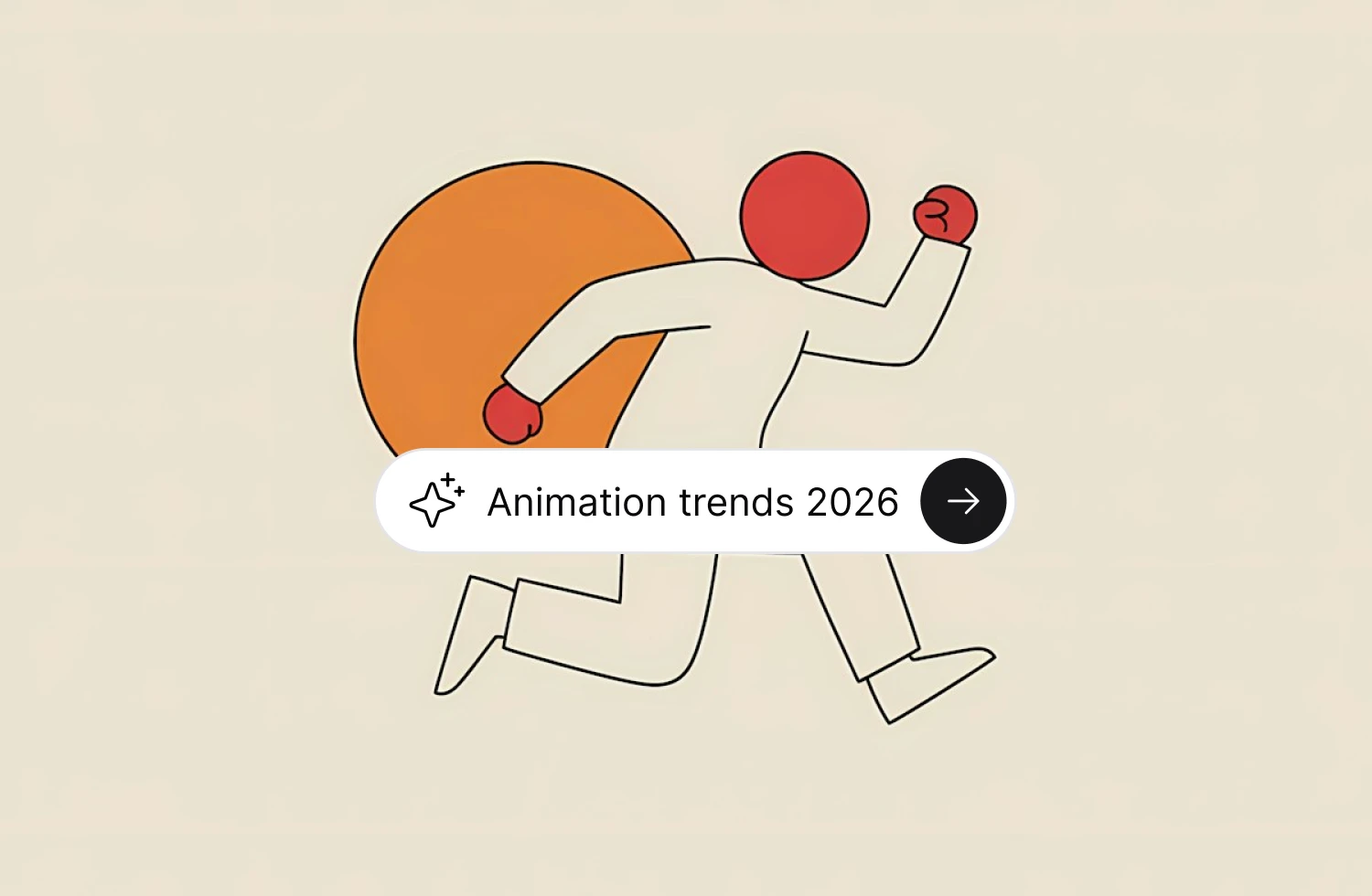
As AI makes animation faster and more accessible in 2026, standing out requires intention, taste, and an understanding of emerging trends.
As we head deeper into 2026, creative power continues to grow. With a simple prompt, anyone can create AI-generated videos and images that might have taken hours to build in years past. Now that everyone can create stunning content in a matter of seconds, it’s important to know how to differentiate your work from the slop.
This is no different for creatives focused on animation. Animated slop is flooding timelines, and one of the best ways to ensure your creativity looks clean and professional is to understand the latest industry trends.
Top 5 animation trends you’ll see in 2026
While trends come and go faster than ever, these are the top trends that we are seeing right now from the most talented creatives. Understanding these will help you make the incremental improvements you need to make your animations memorable.
1. 2D animations are big this year
For years, the creative world chased hyperrealism. Every new tool promised more realistic lighting, more accurate shadows, more detailed textures. And while 3D and realism are still powerful, 2026 has brought something interesting back to the forefront: stylized 2D animation.
In a world saturated with AI-generated gradients, cinematic depth of field, and ultra-slick renders, flat and stylized 2D visuals stand out. They feel intentional. They feel designed. They feel crafted rather than generated.
We are seeing a rise in:
- Hand-drawn textures layered over vector shapes
- Limited color palettes with bold contrast
- Frame-by-frame style motion that mimics traditional animation
- Playful character design with exaggerated proportions
2D also loads faster, adapts better to social platforms, and translates seamlessly across devices. For brands, that flexibility is invaluable.
From a practical standpoint, 2D animation is also easier to iterate on. You can adjust colors, swap text, or refine shapes without rebuilding complex 3D scenes. This makes it perfect for agile teams and social-first creatives.
The key here is not to make “simple” animation. It is to make intentional 2D animation. Add texture. Add subtle grain. Use motion with purpose. Let the design breathe.
In 2026, minimal does not mean boring. It means precise.
2. Make sure to animate your infographics
Static infographics are shareable and easy to digest. But now, attention spans are shorter and feeds are more competitive. If your data does not move, it often does not get noticed.
Animated infographics are one of the strongest animation trends this year, especially in marketing, product design, and educational content.
Imagine a bar graph that grows in real time communicates progress, or a pie chart that builds itself communicates distribution.
Here is what works especially well in 2026:
- Sequential reveals instead of dumping all data at once
- Micro-animations that guide the eye
- Smooth easing that feels natural, not robotic
- Subtle sound design paired with movement
Animated infographics are not about making charts flashy. They are about clarity. Good motion design directs attention to what matters most. It answers the question before the viewer even knows they have one.
AI tools make it easier than ever to generate charts and layouts. But the difference between generic and great lies in timing and hierarchy.
Ask yourself:
- What should the viewer see first?
- What deserves emphasis?
- Where should the motion pause?
If you want your work to look professional in 2026, start thinking of data as a story, not just numbers.
3. Don’t forget to animate your logo, too
In a digital-first world, your brand rarely appears in a single, fixed environment. It lives on websites, apps, social feeds, presentations, product demos, and video content. Motion is now part of brand identity.
Animated logos are one of the easiest ways to elevate perceived quality.
We are seeing brands embrace:
- Subtle entrance animations on websites
- Looping logo animations for social profiles
- Responsive logos that shift shape across devices
- Micro-interactions that integrate logos into UI elements
The most effective animated logos are clean, quick, and intentional. A simple scale-in with refined easing.
There is also a strategic benefit. Animated logos increase brand recall. Movement sticks in memory more than static imagery. When viewers repeatedly see your mark move in a consistent way, they begin to associate that motion with your brand personality.
For creatives, this is a huge opportunity. Offering motion logo packages alongside static brand kits is becoming standard. Clients expect it.
And thanks to AI-assisted workflows, testing multiple animation styles is faster than ever. You can experiment with bounce, fade, slide, or morph variations in minutes.
4. Metal shaders are taking over
One of the most eye-catching animation trends in 2026 is the rise of metal shaders. Chrome, liquid silver, brushed steel, holographic titanium. Metallic finishes are everywhere right now, and they instantly make motion feel futuristic and premium.
After years of soft gradients and muted palettes dominating design, high-shine materials are making a bold comeback. But this is not the harsh chrome of early 2000s web design. Today’s metal shaders are more refined. They bend light in subtle ways. They reflect abstract environments. They shift color slightly as the camera moves.
In motion, metal feels alive.
We are seeing metal shaders used in:
- Logo reveals with liquid chrome surfaces
- Typography that reflects moving environments
- Product animations with brushed aluminum textures
- Abstract shapes coated in iridescent finishes
The appeal is simple. Metal communicates innovation. It feels high-tech and forward-thinking, which pairs perfectly with AI-driven brands and digital-first products.
5. Seamless and near perfect transitions
If there is one animation trend that defines 2026, it is the obsession with smooth transitions.
Jump cuts feel harsh. Abrupt scene changes feel amateur. Viewers have grown accustomed to fluidity.
Seamless transitions keep audiences engaged and make content feel premium.
We are seeing:
- Shape morphing between scenes
- Match cuts that align motion across frames
- Continuous camera moves that flow from one environment to another
- UI transitions that feel tactile and responsive
These techniques create cohesion.
Think of transitions as invisible glue. When done well, viewers do not notice them consciously. They simply feel that the animation flows.
One of the most popular techniques right now is object-based transitions. For example, a circle expands to fill the screen and becomes the background of the next scene. Or a moving character exits frame left and re-enters in a new environment.
Use these trends with intentionality and taste
While these five animation trends define much of 2026, trends alone will not save your work from blending in.
What separates memorable animation from generic content is intentionality.
Ask yourself:
- What emotion should this animation evoke?
- Who is this for?
- What action should it inspire?
AI has democratized creation. That is powerful. But it has also raised the bar. Because when everyone can create, taste becomes the differentiator.
Study pacing. Study composition. Study typography in motion. Watch how top studios use negative space. Pay attention to how long a scene holds before transitioning.
Great animation is not about cramming in as much movement as possible. It is about controlling movement.
What we learned from AI ads in Superbowl XL