Cool things we saw with graphic design in February

These are some of the coolest things we saw from graphic designers in February.
February always feels like a design mood board in motion. It is short, unpredictable, and packed with creative experiments that either quietly disappear or shape the rest of the year.
If January is about predictions and polished forecasts, February is where those predictions start to breathe. We saw early hints of what could define marketing trends 2026, UI trends 2026, and even animation trends 2026. The inspiration showed up in real work like campaigns, product launches, social graphics and micro-interactions.
Here’s what stood out.
What stood out in February
Patterns began to emerge across platforms. Web design felt more fluid while brand visuals started embracing imperfection. Motion shifted from flashy to expressive, asnd geometry returned, but not in the sterile way we have seen before.
Let’s break it down.
1. Liquid design
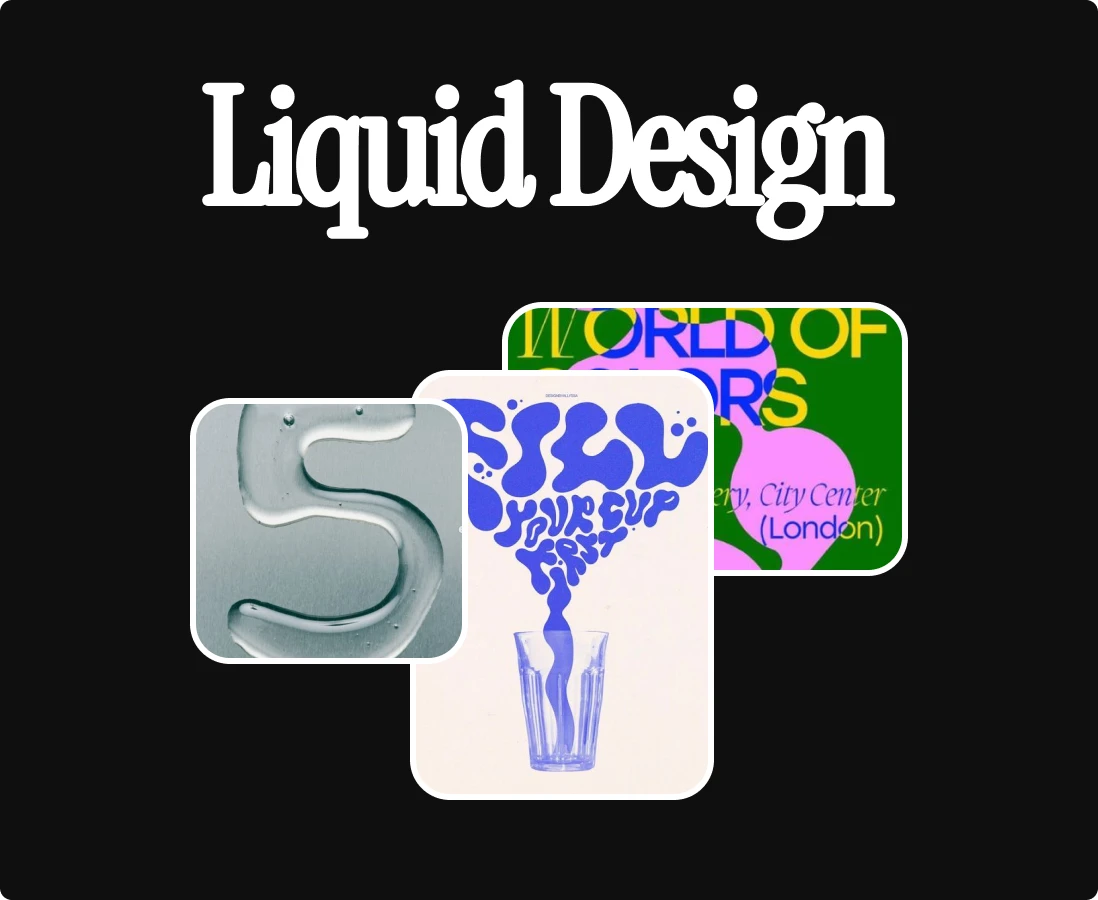
Liquid design was everywhere this month. And not just in the obvious wavy gradients or glossy 3D blobs. We saw liquidity in typography, layouts, navigation, and even storytelling.
This direction hints at broader UI trends 2026. Interfaces are becoming less rigid. Grid systems still exist, but they are being disguised under motion and texture. Instead of sharp separations between sections, we are seeing blending. Cards bleed into backgrounds. Images dissolve into gradients.
From a brand perspective, liquid design communicates adaptability. In a time where AI tools are reshaping workflows weekly, visual fluidity feels symbolic. Brands want to look flexible. Responsive. Human.
Liquid design also pairs beautifully with motion, which is why it connects to animation trends 2026. Micro-interactions are becoming less about utility alone and more about feeling. A subtle ripple effect can make a product seem thoughtful. A morphing logo can signal innovation without screaming about it.
2. Blur and reveal design
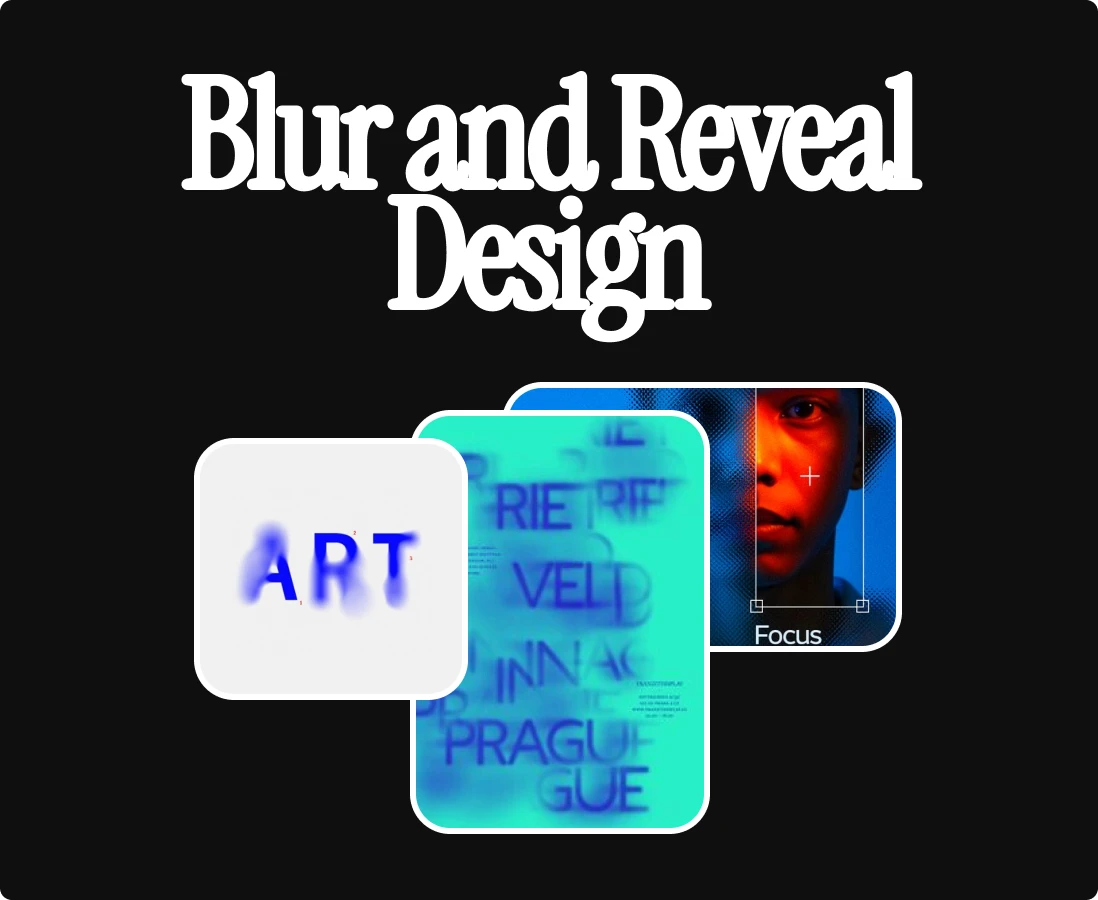
Designers used blur to control attention, create anticipation, and add depth.
We saw product images partially obscured until scroll, and navigation menus that blurred the background just enough to create separation without harsh contrast.
This style aligns strongly with marketing trends 2026, especially the growing emphasis on interactive storytelling. Instead of presenting everything upfront, brands are layering information. They are inviting the audience to uncover details.
The psychological impact is subtle but important. When something is slightly hidden, we lean in for clarity. That small interaction builds engagement.
In UI design, blur is evolving from aesthetic decoration to functional hierarchy. Designers are using depth intentionally. Foreground elements pop, while secondary information softens. It creates a more immersive experience without overwhelming users.
We also saw blur combined with motion. Text sliding into focus. Images resolving from haze into sharp detail. These transitions feel cinematic, which connects again to animation trends 2026. Micro-animations are beginning to borrow techniques from film. Focus shifts. Light adjustments. Gradual reveals.
3. Geometric design
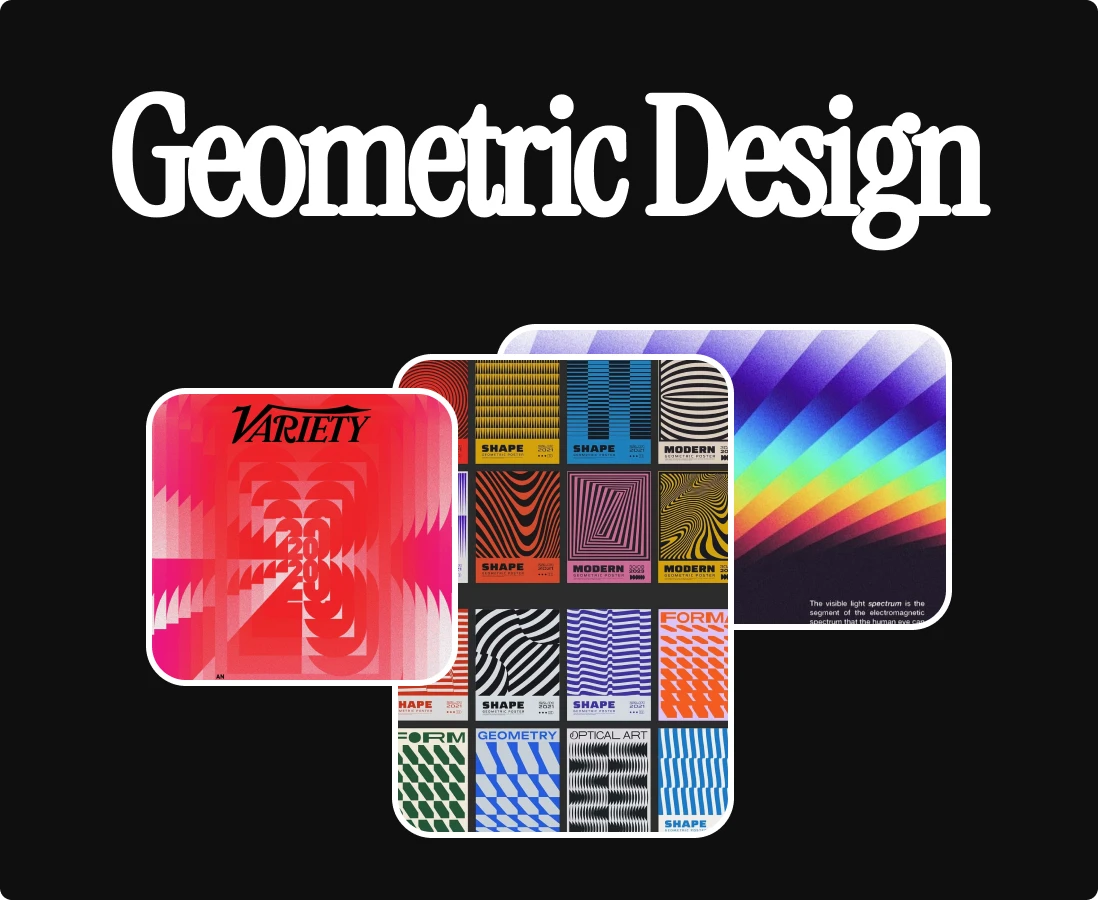
Geometric design often cycles back during periods of uncertainty. There is something comforting about structure. About symmetry. This month, designers combined structure with personality.
We saw vibrant color blocks anchoring layouts. Posters built from simple triangles and circles. Interfaces that used repeated patterns to create rhythm.
This resurgence connects to UI trends 2026 in a big way. As interfaces become more complex with AI-driven personalization, visual systems need clarity. Geometry provides that clarity. It builds consistency across dynamic content.
For marketing visuals, geometry feels confident. Clean shapes can make bold messages even bolder. And when paired with strong fonts, the result feels intentional and modern.
Interestingly, geometric design also showed up in motion graphics. Shapes rotating and aligning. Lines animating into grids. Simple forms building complex visuals. This is where animation trends 2026 seem to be heading. Instead of hyper-realistic 3D for everything, we are seeing a return to foundational forms with refined motion.
4. Sketchbook design
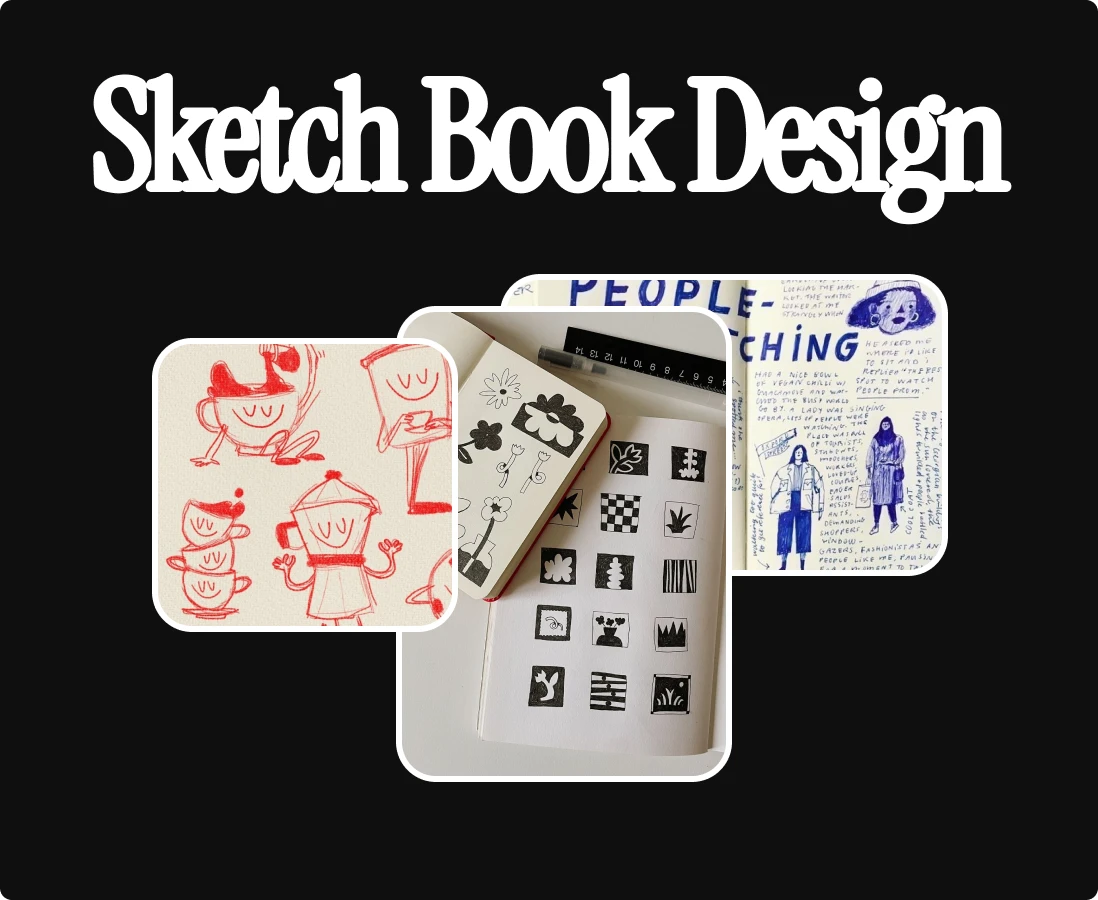
Perhaps the most refreshing direction this month was sketchbook design. Imperfect lines. Handwritten notes. Doodles layered over polished layouts.
In a world saturated with AI-generated visuals, imperfection stands out. Designers are intentionally showing process. Crossed-out words. Rough illustrations. Margins filled with scribbles.
Sketchbook design does not reject technology. Instead, it blends digital precision with analog warmth. Clean layouts mixed with hand-drawn icons. Crisp typography paired with pencil textures.
This trend speaks directly to marketing trends 2026. Audiences are craving authenticity. Overly polished campaigns can feel distant. Sketchbook aesthetics create intimacy. They feel behind the scenes.
From a UI perspective, sketchbook elements are being used sparingly. A hand-drawn arrow guiding attention. A rough underline emphasizing a key phrase. These details create personality without sacrificing usability.
Getting ready for an aesthetic March
February felt exploratory. March will refine what worked.
As you head into March, test one small shift. Add a smoother transition. Strengthen your layout with simple shapes. Layer in a subtle hand-drawn detail.
February sparked the ideas. March is where you build on them.
Design skills you'll need in 2026